

Russia and China: A New Cooperation Trajectory Developed at HSE University
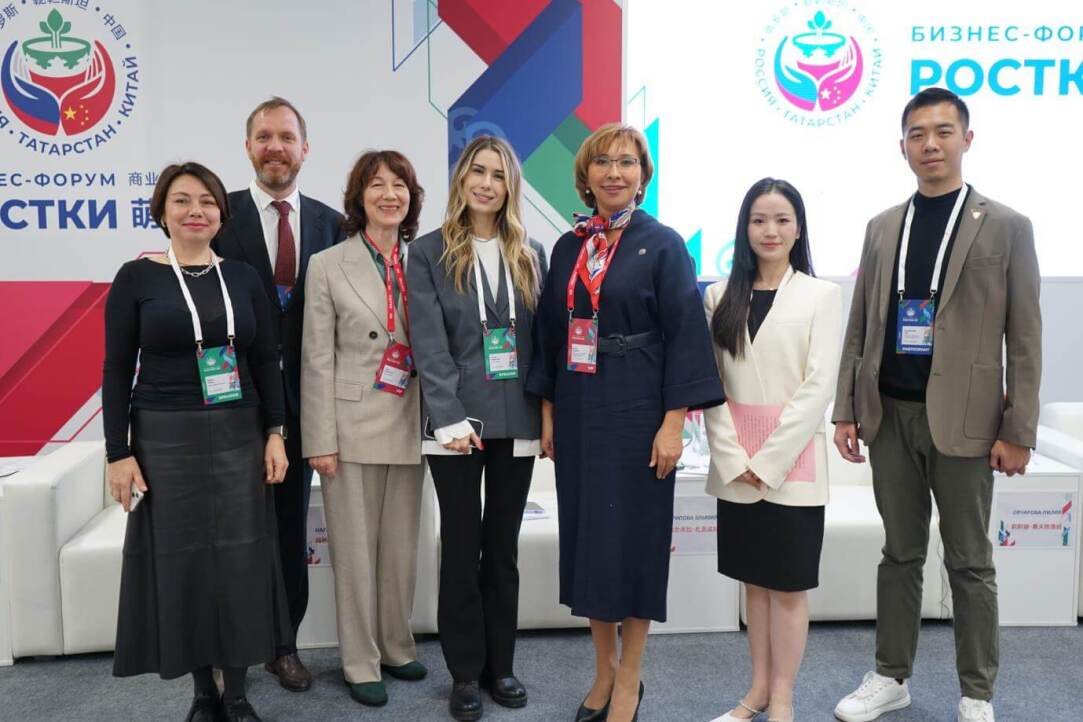
A unique approach to measuring human well-being has been developed at HSE University, opening up new opportunities for international collaboration. Russia and China, both of which have significantly reduced poverty in recent years, demonstrate a unique potential for joint efforts in this area. At an international forum in Kazan titled ‘SPROUTS: Russia and China–Mutually Beneficial Cooperation,’ HSE University representatives, including Vice Rector and initiator of the Human Capital Multidisciplinary Research Centre Lilia Ovcharova, and Deputy Vice Rector Maria Nagernyak, emphasised the importance of integrating the efforts of the two countries.
Speaking at the session ‘Best Practices in Poverty Reduction,’ organised as part of the forum by the Ministry of Labour, Employment, and Social Protection of the Republic of Tatarstan, HSE University representatives noted changes in Russia’s official approach to poverty measurement in 2021. Russia introduced two poverty lines: one for monitoring and the other for determining eligibility for social benefits.
‘Russia and China are two countries that have significantly reduced poverty over the last decade. Poverty is a relative concept in time and space. Criteria used to define poverty 20 years ago may no longer be relevant today. Since 2021, Russia has applied two poverty lines: one for monitoring and another for social benefit payments. Researchers also assess subjective poverty and deprivation poverty, and the groups identified under these concepts often do not overlap,’ Lilia Ovcharova explained.


Currently, both science and policy are undergoing a conceptual shift from measuring and evaluating poverty to focusing on well-being. Russia and China are two countries that have substantially reduced poverty over the last ten years, which is why their bilateral cooperation in enhancing well-being is seen as particularly promising.
‘We are witnessing a change in how the quality and standard of living are studied, shifting from poverty assessment to well-being evaluation. Both we and our Chinese colleagues are moving in this direction, which offers great potential for cooperation and joint scientific research and events,’ Maria Nagernyak concluded.
HSE University has already achieved notable results in studying human well-being. This includes developing an expanded definition of well-being, identifying key policy priorities for improving well-being and reducing poverty by 2030, and establishing new material well-being standards for families with two and three children in Russia.
Additionally, representatives from the Human Capital Multidisciplinary Research Centre highlighted strategic measures Russia is implementing to improve population well-being, which could form the basis for bilateral cooperation:
- income: raising the minimum wage, accelerating median wage growth, and introducing targeted benefits for families with children
- housing and living conditions: implementing maternity capital and family mortgages
- support for birth rates: increasing minimum wages, accelerating median wage growth, and introducing targeted benefits for families with children
- active longevity: increasing life expectancy to 78 years by 2030 and to 81 years by 2036
At the session’s conclusion, Elmira Zaripova, Minister of Labour, Employment, and Social Protection of the Republic of Tatarstan, thanked the forum participants and noted the evident prospects for cooperation between Russia and China, particularly between HSE University and Beijing Normal University.
‘Thanks to our esteemed colleagues, HSE University scholars Lilia Ovcharova and Maria Nagernyak, the session presented scientific findings on poverty analysis in Russia and the transition from the concept of poverty to well-being. A similar approach is supported by Zhang Qi, Director of the China Institute of Poverty Reduction at Beijing Normal University. Studying effective practices for raising incomes is a promising area of scientific and practical activity for both Russia and China, as well as for research institutions and practitioners working in the regions,’ Elmira Zaripova stated.
See also:

‘Analytical Centres and Programmes for PhD Students’: HSE University–St Petersburg Offers New Formats of Cooperation with PRC
The Rope Shop Educational Space of HSE University–St Petersburg hosted a conference on the present and future of Russian–Chinese relations. Together with Luo Zhanhui, Consul General of China in St Petersburg, leading experts in Asian and African Studies discussed vectors for the long-term development of the countries, the synergy of joint projects, and future educational partnerships.
Transition to Sustainable Development Requires Deep Structural Transformation of Business
A group of researchers has proposed assessing the ESG transformation of businesses through the partner turnover ratio in raw material and distribution supply chains. The researchers note that the path towards sustainability requires a deep and often costly restructuring of partner networks. This and other papers were presented at the Third International Annual Conference ‘ESG Corporate Dynamics: the Challenges for Emerging Capital Markets.’
HSE University Hosts China Academy of Art Delegation to Strengthen Academic and Research Cooperation
On December 12, HSE University welcomed a delegation from the China Academy of Art — one of the most prestigious creative universities in Asia. The visit built on the dialogue launched in September and reaffirmed the mutual interest in collaboration outlined during the visit of Natalia Logutova, Deputy Director of the HSE Institute for Creative Industries Development, to the academy’s campus in Hangzhou. The parties discussed ideas that could form the foundation for long-term partnership—from digital reconstructions of historical spaces to joint educational programmes and research initiatives.
Eighth International U4U Online Seminar Unites Experts from 14 Countries
The HSE Online Campus hosted a two-day international U4U (Universities for Universities) seminar, which traditionally serves as a platform for exchanging expertise in online learning. This year, the event has reached a global scale, attracting international experts and representatives of universities from around the world. Together, they discussed key challenges and strategies for the development of online education. The online meeting was held in mid-November.
‘Keep Working, Keep Publishing—Consistency Matters’
Ziyuan Zhu, from Beijing, China, is an international PhD student at the Institute for Public Administration and Governance at HSE University in Moscow. In this interview with the HSE News Service, Ziyuan talks about how studies can influence one’s outlook on life, comparing public service models in different countries, and why being a Chinese student in Russia is advantageous in research.
Under a Blooming Magnolia: How Russian and Chinese Scientists Create Solar Cells of the Future
Schola continues to introduce the winners of the International Academic Cooperation competition. In today's issue, Professor Andrey Vasenko, Deputy Head of the Scientific and Educational Laboratory of Quantum Nanoelectronics at Tikhonov Moscow Institute of Electronics and Mathematics (MIEM), speaks about the joint project between his laboratory and the Peking University research team— ‘Engineering of highly efficient and stable perovskite solar cells.’
Graduate School of Business MBA Students Take Part in Offsite Module in China
MBA students of the HSE Graduate School of Business HSHSE have recently completed the international component of their studies at the School of Economics and Management at Tsinghua University. The module focused on developing business through innovation. The participants discussed the impact of new technologies on corporate structures and visited companies operating in robotics and renewable energy.
Meeting with Xinhua Delegation: Discussion on Contemporary Journalism at HSE
On October 22, 2025, HSE University hosted an open meeting with representatives of the Chinese news agency Xinhua, led by Sun Zhiping, Chief of Staff to the Director General. Participants discussed current challenges in journalism and the operational specifics of news agencies in today’s media landscape. Many students took the opportunity to ask questions and practise speaking Mandarin. The visit was organised by the Faculty of World Economy and International Affairs in collaboration with the HSE Institute of Media and the TASS news agency.
HSE Participates in Conference on International Exchange of Professionals in China
From October 21 to 24, 2025, the 23rd Conference on International Exchange of Professionals took place in Shanghai and Beijing, bringing together more than 7,000 scientists and experts from around the world. HSE University was represented by Ivan Arzhantsev, Dean of the Faculty of Computer Science, and Vasily Gromov, Head of the Laboratory for Semantic Analysis of the Centre for Language and Semantic Technologies.
‘It Was Interesting to See How Our Chinese Colleagues Work’: HSE Researchers Take Part in Hefei Summer School
This summer, Diana Sukhoverkhova, Daria Mazur, and David Kagramanyan, research assistants at the MIEM HSE Laboratory for Computational Physics, spent five weeks in China. At the Future Scientist Exchange Program (FuSEP) summer school in Hefei, they worked in new fields of science together with their Chinese colleagues. HSE's promising scientists spoke to the HSE News Service about their intense and productive time in China.